Engineering for Scale: Modernizing the Crew Ecosystem for Global Integration
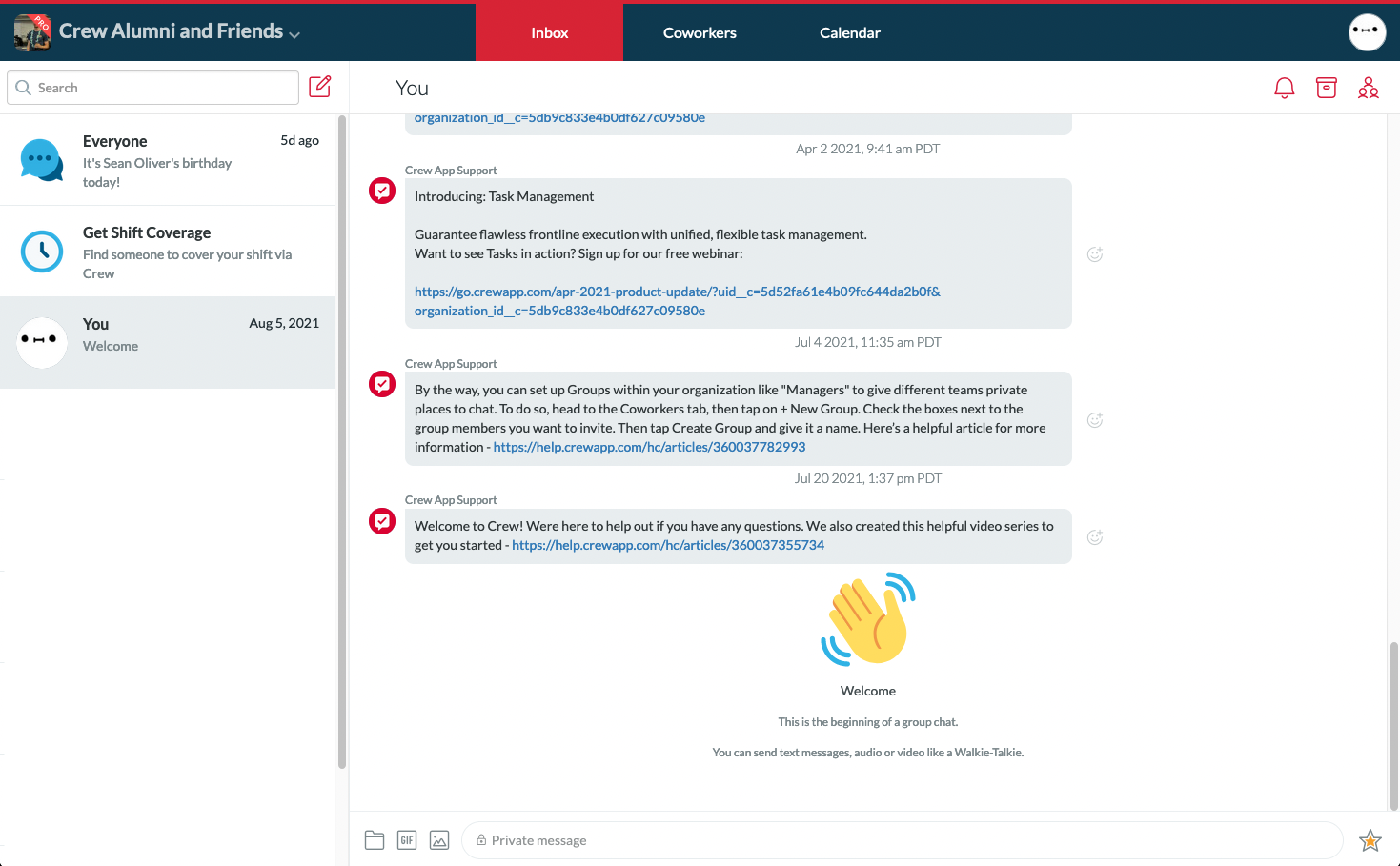
In the world of high-stakes software engineering, technical decisions are the difference between a product that plateaus and one that becomes a multi-million dollar asset. During my time as a Software Engineer at Encora, I was embedded with Crew to lead a critical architectural overhaul of their flagship communication and scheduling platform.
The mission was clear: take a high-growth startup’s legacy infrastructure and re-engineer it into a high-performance, real-time ecosystem capable of supporting millions of frontline workers.
1. Deconstructing Architectural Debt: The Migration to React
The challenge began with a foundation built on BackboneJS. While it served Crew in its early stages, it struggled with view consistency and complex state synchronization as the feature set expanded to include intricate scheduling and task management.
I led the strategic migration to a React.js and TypeScript architecture. By enforcing strict typing across the repository, we moved from implicit data structures to a predictable, robust environment. This was essential for managing the high-density domain objects inherent to Crew—such as multi-layered worker calendars and real-time shift swaps—ensuring the interface remained resilient under heavy load.
2. Low-Latency Infrastructure via WebSockets
At its core, Crew is a communication platform. Standard HTTP polling was discarded in favor of a masterful WebSocket-based implementation to facilitate the app's signature Slack-like messaging and real-time task alerts.
- The Technical Shift: By moving to an event-driven model, we eliminated unnecessary server overhead and ensured near-zero latency for mission-critical kitchen and floor communications.
- Data Synchronization: This allowed for a truly reactive UI. Whether a manager assigned a task or a worker swapped a shift, the state was pushed globally and updated instantaneously across all connected clients.
3. State Normalization and Scalability with Redux
Managing the global state of an application that tracks hundreds of concurrent data points required a sophisticated approach. I utilized Redux.js to centralize application logic, focusing heavily on state normalization.
By optimizing the Redux store and utilizing memoized selectors, I ensured that the front-end remained lightning-fast. This architectural rigor was pivotal in making the application horizontally scalable, ensuring that as Crew’s user base exploded, the performance stayed consistent.
4. Engineering a Unified Component System (MUI)
To ensure a seamless user experience across the entire Crew suite, I collaborated with the design team to develop a custom design system on top of Material-UI (MUI).
Rather than using generic components, we engineered a library of reusable, themeable units. This approach:
- Standardized the UX across diverse modules, from real-time chat to complex scheduling analytics.
- Accelerated development velocity, allowing the team to ship new features with the confidence that they were pre-optimized for performance and accessibility.
5. Optimizing Discovery: The Fuzzy Search Engine
Recognizing that frontline workers need information in seconds, I implemented a comprehensive fuzzy search feature. By integrating advanced filtering logic, we enabled users to navigate massive datasets—messages, files, and shift logs—with imperfect or partial queries. This significantly reduced friction for users operating in high-pressure environments.
The Ultimate Validation: Acquisition by Square
The technical rigor we applied to the Crew platform—from the type-safe React architecture to the real-time WebSocket layer—transformed the product into an enterprise-grade asset.
This commitment to engineering excellence was a primary driver in the platform's success, ultimately leading to the successful acquisition of Crew by Square (Block, Inc.). Seeing the architecture I helped build integrated into Square’s global ecosystem stands as the ultimate validation of our technical strategy.
Let’s Connect
I specialize in building scalable front-end architectures that prioritize clean code and high-performance outcomes. If you are looking for an engineer who understands how to turn technical debt into a high-value enterprise solution, I’d love to start a conversation.