Re-Engineering the Reader Experience at The Wall Street Journal
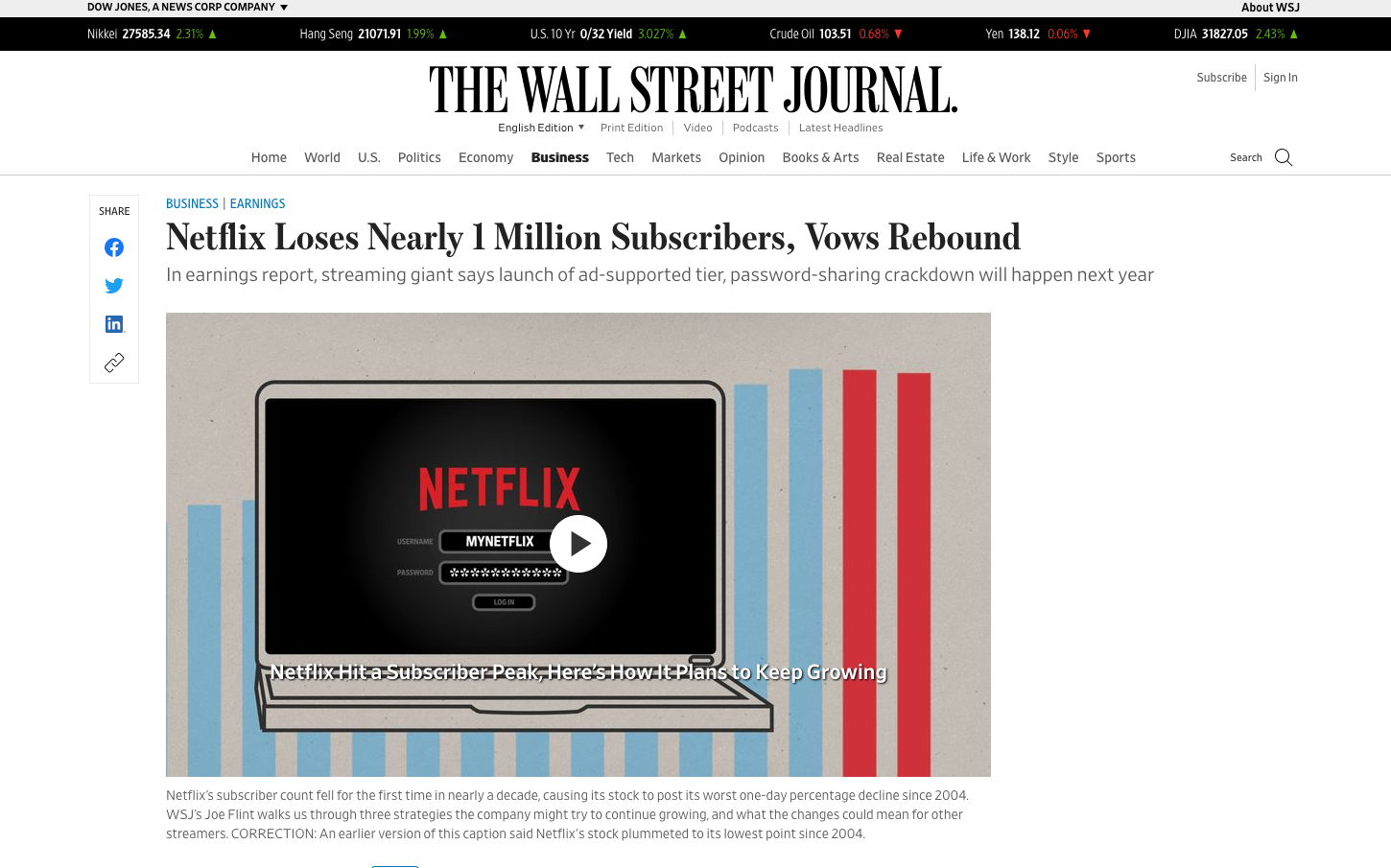
In high-stakes financial journalism, information is a commodity whose value degrades by the second. For The Wall Street Journal, a global leader in business news, the frontend of the article reader isn't just a UI—it is a mission-critical delivery system. When markets move, our infrastructure must be invisible, instantaneous, and infallible.
I recently served as a Frontend Software Engineer on the core team tasked with a complete architectural rebuild of the WSJ news article reader. Transitioning from a legacy system to a masterful implementation of Next.js and TypeScript, we focused on one uncompromising North Star: Performance.
The Challenge: High-Fidelity Content at Global Scale
The Wall Street Journal serves a sophisticated global audience that demands precision. The existing reader faced modern performance bottlenecks that threatened the user experience. Our objective was to replace the engine while the plane was in flight, ensuring:
- Sub-second "Time to Interactive" (TTI): Readers should be able to engage with complex financial data and charts without layout shifts or loading stutters.
- Bulletproof Type Safety: In an environment where data integrity is paramount, we needed a codebase that prevented runtime errors before they ever reached a user’s browser.
- SEO Dominance: Maintaining the Journal’s authority in search rankings required a sophisticated Server-Side Rendering (SSR) strategy to ensure crawlers could index high-value reporting instantly.
The Approach: Architecture Built for Velocity
I approached this rebuild not just as a feature update, but as a fundamental re-engineering of how news is delivered. My focus was on creating a scalable, data-driven architecture that could support the Journal’s rigorous editorial standards.
Masterful Implementation of TypeScript
By enforcing strict typing across the entire frontend, I eliminated a massive category of potential UI bugs. This was transformative for our development velocity; it allowed us to refactor complex logic for financial tickers and multimedia embeds with the certainty that we were maintaining 100% architectural integrity.
Leveraging Next.js for Performance Optimization
I played a pivotal role in designing our Rendering Strategy. By utilizing Next.js, we moved heavy computational logic from the client's device to the server. This ensured that even users on low-bandwidth connections or older hardware received a lightning-fast, premium reading experience.
Scalable Component Design
I helped lead the shift toward a modular, Atomic Design system. By building a library of high-performance components, we ensured that every article—from a brief market update to a long-form investigative piece—shared a unified, optimized codebase. This drastically reduced redundant code and "bloat," leading to a leaner, more agile application.
Results: Quantifying the Impact
The results of this migration redefined the standard for digital news delivery at the Journal. By prioritizing performance and stability, we achieved:
- Significant Reductions in Page Weight: By optimizing our build pipeline and component architecture, we delivered a more responsive experience with a smaller footprint.
- Enhanced Stability: The introduction of TypeScript led to a dramatic decrease in production incidents, ensuring the news stayed live during high-traffic market events.
- Improved Core Web Vitals: Our focus on SSR and efficient hydration strategies resulted in superior performance metrics, directly supporting the Journal’s digital growth and SEO health.
- Developer Efficiency: The new architecture empowered the team to ship features with unprecedented speed, moving from concept to production in a fraction of the time required by the legacy system.
Conclusion: The Intersection of Engineering and Excellence
Rebuilding the article reader for The Wall Street Journal was a lesson in engineering for impact. It reinforced my belief that in a world of instant information, performance is the ultimate feature. My role was to ensure that the technology lived up to the reputation of the journalism it supports: authoritative, reliable, and fast.
I am now looking to bring this same level of technical rigor and performance-focused mindset to my next challenge. I specialize in building scalable, high-performance web applications that thrive under the pressure of global traffic.
Would you like to discuss how a modern Next.js and TypeScript architecture can transform your platform’s performance? Let's connect and share insights.