Revolutionizing Auto Finance: How I Engineered a Scalable Microservices Ecosystem for FinBe
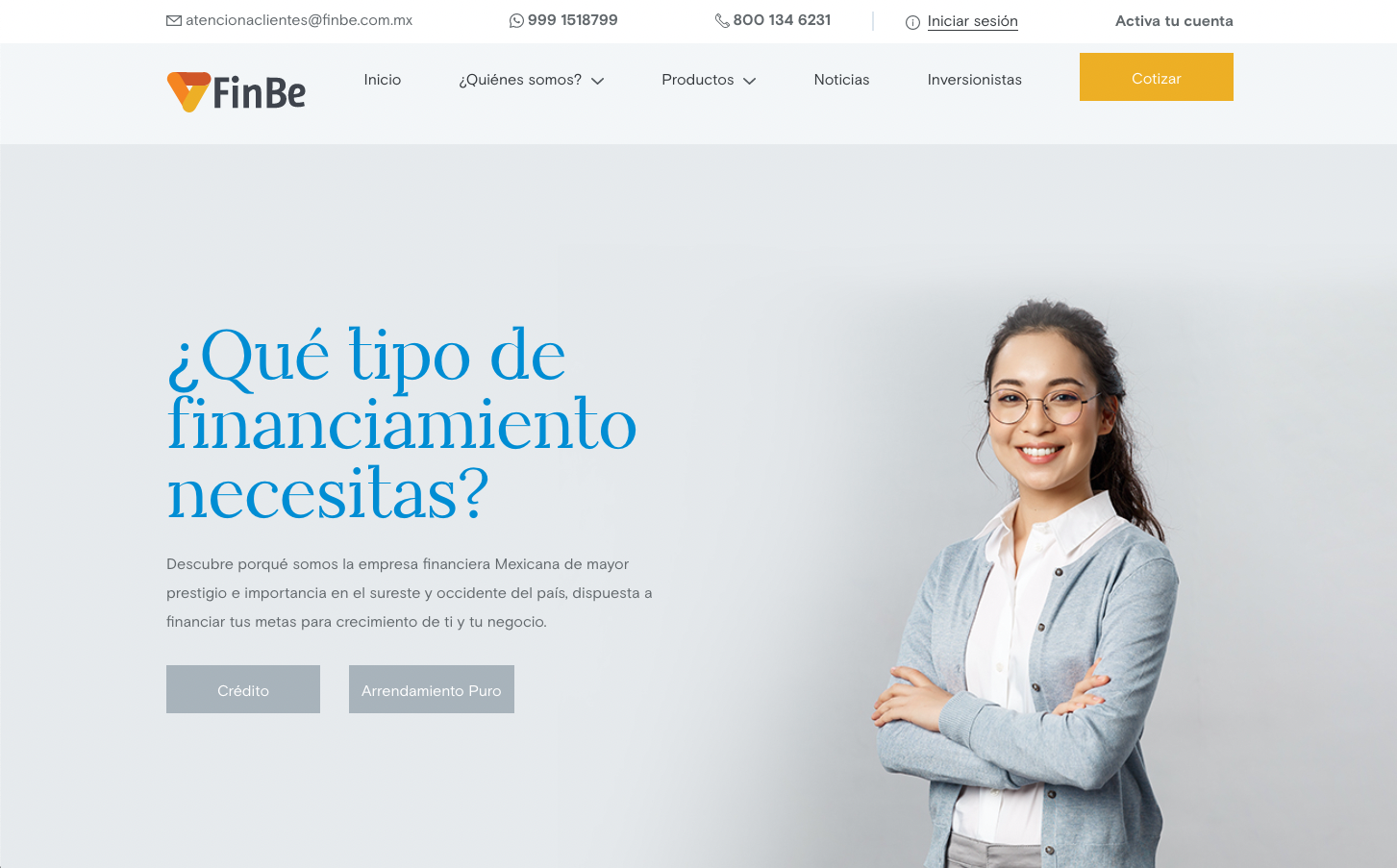
In the fast-paced world of fintech, the difference between a lost lead and a loyal customer often comes down to seconds. During my tenure as a Full Stack Engineer at Yellowme, I was presented with a challenge that would define my approach to modern software architecture: transforming the digital backbone of FinBe (Financiera Bepensa), a heavyweight in the financial sector.
This wasn't just about writing code; it was about reimagining how a traditional auto loan department operates in an increasingly digital-first economy.
The Challenge: Breaking the Monolithic Ceiling
When I joined the project, FinBe’s auto loan department was at a critical juncture. They needed to scale, but their existing processes faced the classic "speed vs. stability" dilemma. The objective was clear but ambitious: create a high-performance suite of tools that would not only agilize their business operations but directly drive a measurable increment in sales.
The stakes were high. In the auto-financing world, delays in credit processing or data silos between departments don't just cause headaches—they cause lost revenue. We needed a solution that was modular, lightning-fast, and infinitely scalable.
My Approach: Embracing the Cutting Edge
To tackle a problem of this magnitude, I didn't just lean on standard practices; I leveraged a masterful stack of modern technologies to build a future-proof ecosystem. My strategy centered on a Microservices Architecture, ensuring that each component of the loan lifecycle was decoupled and optimized for peak performance.
The Technical Powerhouse
I spearheaded the development using a specialized toolkit designed for speed and reliability:
- Node.js & TypeScript: By implementing a strictly typed environment, I ensured enterprise-grade code quality and eliminated entire classes of runtime errors before they could reach production.
- React JS: For the front-end, I crafted intuitive, highly responsive user interfaces that translated complex financial data into actionable insights for the FinBe team.
- RESTful APIs: I designed and deployed robust APIs that served as the nervous system of the suite, allowing for seamless data flow between services.
- Heroku: Utilizing sophisticated cloud deployment strategies, I ensured our infrastructure was elastic and resilient, capable of handling surges in application volume without a hiccup.
Key Innovations: From Concept to Microservices
The core of my contribution was the architectural shift to microservices. Rather than building a singular, "heavy" application, I broke down the auto loan department's needs into specialized, high-efficiency services.
1. The Agility Engine
I developed a suite of services specifically designed to automate the manual hurdles in the loan application process. By streamlining the data validation and approval workflows, we dramatically slashed the turnaround time for credit decisions.
2. Data-Driven Sales Empowerment
Innovation isn't just about back-end logic; it’s about the bottom line. I integrated features that allowed sales agents to track applications in real-time, providing them with the data-driven insights needed to close deals faster and more effectively.
3. Scalable Infrastructure
By leveraging Node.js's non-blocking I/O and the modularity of microservices, I built a system that could handle a massive influx of data. This ensured that as FinBe’s sales grew, their technology would never be the bottleneck.
Results and Impact: A Transformation in Numbers
The deployment of this suite marked a "before and after" moment for FinBe’s auto loan department. While the primary goal was technical modernization, the business impact was transformative:
- Accelerated Business Velocity: The transition to microservices allowed for unprecedented agility, enabling the department to process applications with a speed that left competitors in the rearview mirror.
- Substantial Sales Increment: By removing technical friction, the tools I engineered directly contributed to a significant boost in sales volume, empowering the team to capitalize on market opportunities instantly.
- Seamless Reliability: Through rigorous TypeScript implementation and cloud optimization on Heroku, we achieved a level of system stability that maximized uptime during peak business hours.
Lessons Learned: The Art of Full-Stack Leadership
My time at Yellowme working with FinBe was a masterclass in high-impact engineering. It reinforced my belief that a Full Stack Engineer’s job isn't just to "make it work"—it’s to make it thrive.
I learned that technical excellence in JavaScript and Node.js is only half the battle. The other half is strategic problem-solving: understanding the client’s business goals so deeply that the code you write becomes a primary driver of their success. I emerged from this project not just as a developer, but as a pivotal technical architect capable of leading complex digital transformations.
Looking Forward
Today, I continue to apply this same level of innovation, leadership, and technical mastery to every project I touch. I am constantly looking for new ways to push the boundaries of what Full Stack Development can achieve for enterprise-level clients.
Are you looking for a developer who can turn complex business challenges into scalable, high-performing reality?
Let’s connect! I’m always open to discussing Agile methodologies, Microservices architecture, or how we can use the latest in TypeScript and React to revolutionize your business.